Residential equivalence and urban economic segregation
September 3, 2026
Research context ![]()
- ERC Starting Grant on Urban economic segregation and public policy
- Results emphasize households, housing and social housing (Cottineau-Mugadza, 2025) (San Millán et al., 2026b) (Buitrago-Mora & Cottineau-Mugadza, 2026)
- Residential choice is complex, circular and constrained (Krysan & Crowder, 2017) (DeLuca & Jang–Trettien, 2020) (Tammaru et al., 2021)
Residential choice & lifecourse
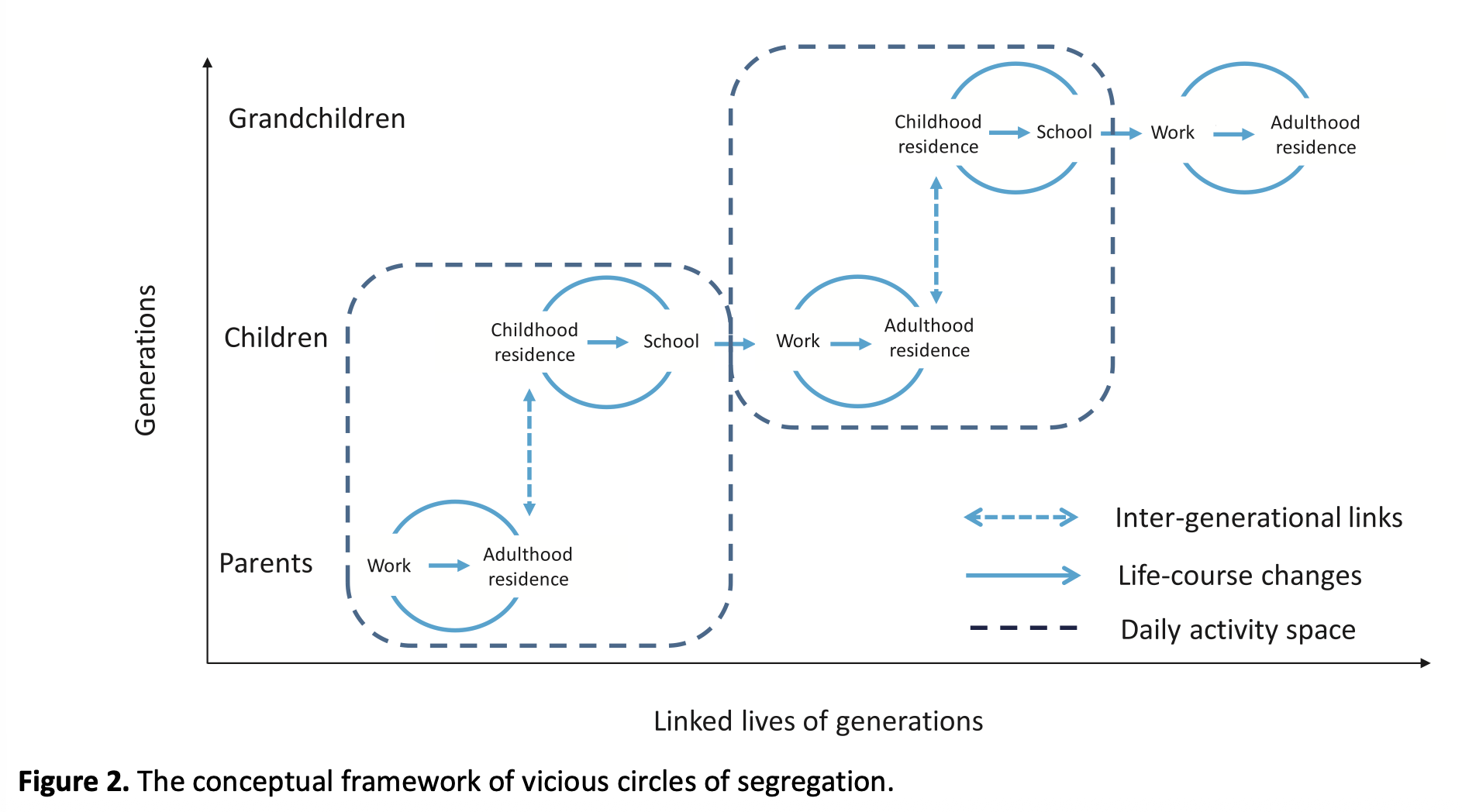 Source: (Tammaru et al., 2021)
Residential choice modelling
- Qualitative approach to collect households’ rationale for moving, constraints and options to move and decision process of where to move (DeLuca & Jang–Trettien, 2020)
- Discrete choice models of decision to move and destination choice (McFadden, 1978), combines household composition, lifecourse and housing characteristics.
- (Bruch & Swait, 2019)’s research on neighbourhood choice process with introduction of the idea of choice set formation.
 .
.
Trade-offs and utility
- Unobservable utility concept at household level
- Qualitative exploration of trade-off processes for hundreds of (poor) households
- Observed monetary value of houses (prices and rent levels)
- Legacy of (non-universal) assumptions from utility models, ex. Alonso-Muth-Mills monocentric city.

 source: (Alonso, 1964)
What strategies can we use to look at revealed preferences?
- Spatial equivalence: Where can you move while keeping your job constant?
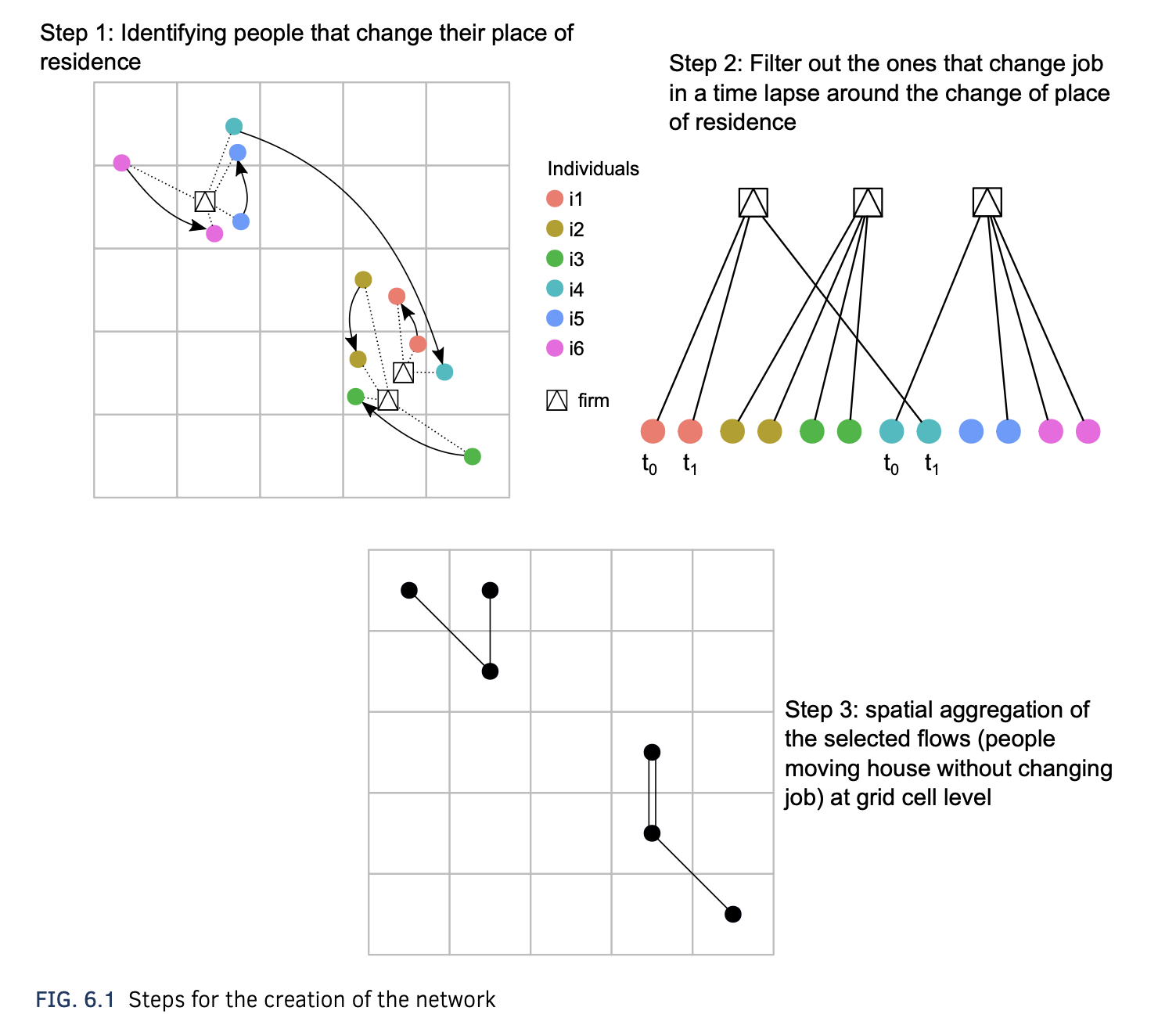
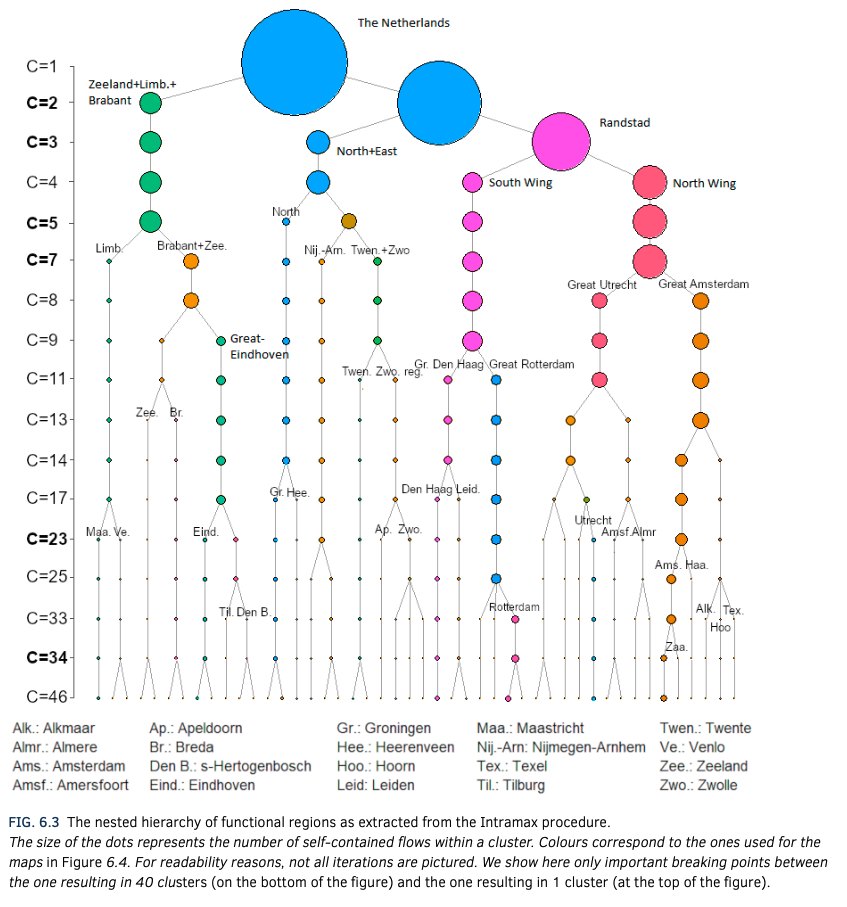
- Daily urban systems drawn by work-life location equivalents
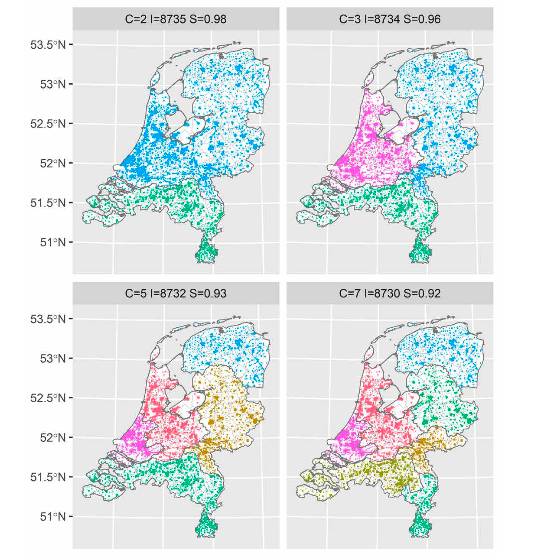
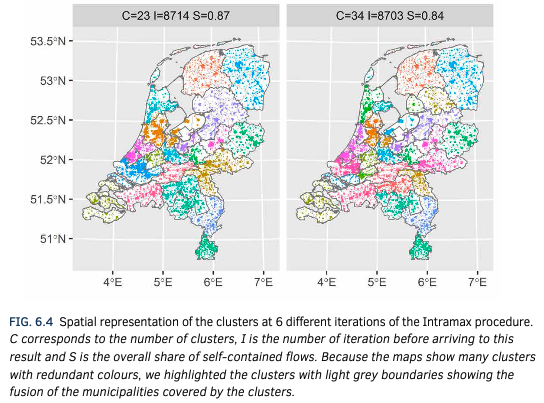
source: (Peris, 2021)
More about…


”