Synthetic populations, synthetic cities and the spatio-temporal effects of urban inequality and segregation

Clémentine Cottineau-Mugadza et al. | SocSimFest2026

May 19, 2026

“et al.”

Vicious cycle/circles of segregation

  • Social segregation in cities refers to the uneven spatial distribution of individuals from different social groups.

  • It is reproduced through the unequal resources, networks and preferences of individuals of different sociodemographic groups (Krysan & Crowder, 2017)

  • Segregation itself produces social inequalities through contextual effects across life domains (Tammaru et al., 2021)

Beyond Static Segregation

Segregation and contextual effects differ throughout the day, as people move between locations in a city (Le Roux et al., 2017)

Effects of spatial segregation on social outcomes need to be studied temporally (“around the clock”).

Review of segregation ABMs

Systematic review of 55 research articles (Pizarro Kumpf et al., 2026)

“Ultimately, a model’s design heavily influences its analytical capacity: abstract preference models excel at demonstrating how individual homophily leads to population sorting, whereas empirical economic models provide the necessary architecture to evaluate why structural markets enforce these divides and how targeted policies might successfully intervene.”

Beyond Static Segregation

  • Objective: To understand the effects of spatio-temporal social segregation on the diffusion of dietary behaviours.

  • Problem: data can become unsufficient. (Cottineau-Mugadza et al., 2025)

Empirical agent-based model initialised with spatiotemporal synthetic population on the Paris region.

Study design

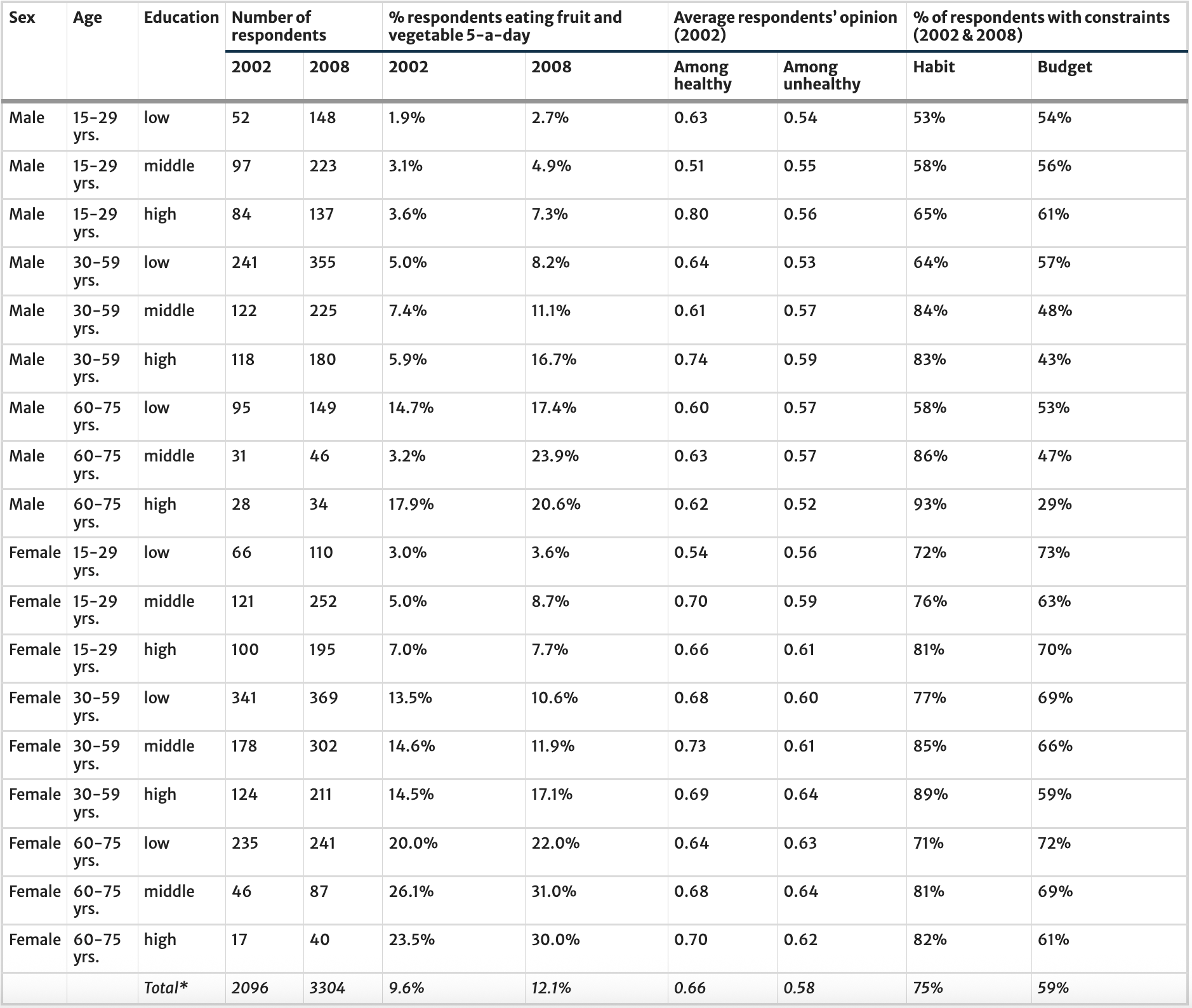
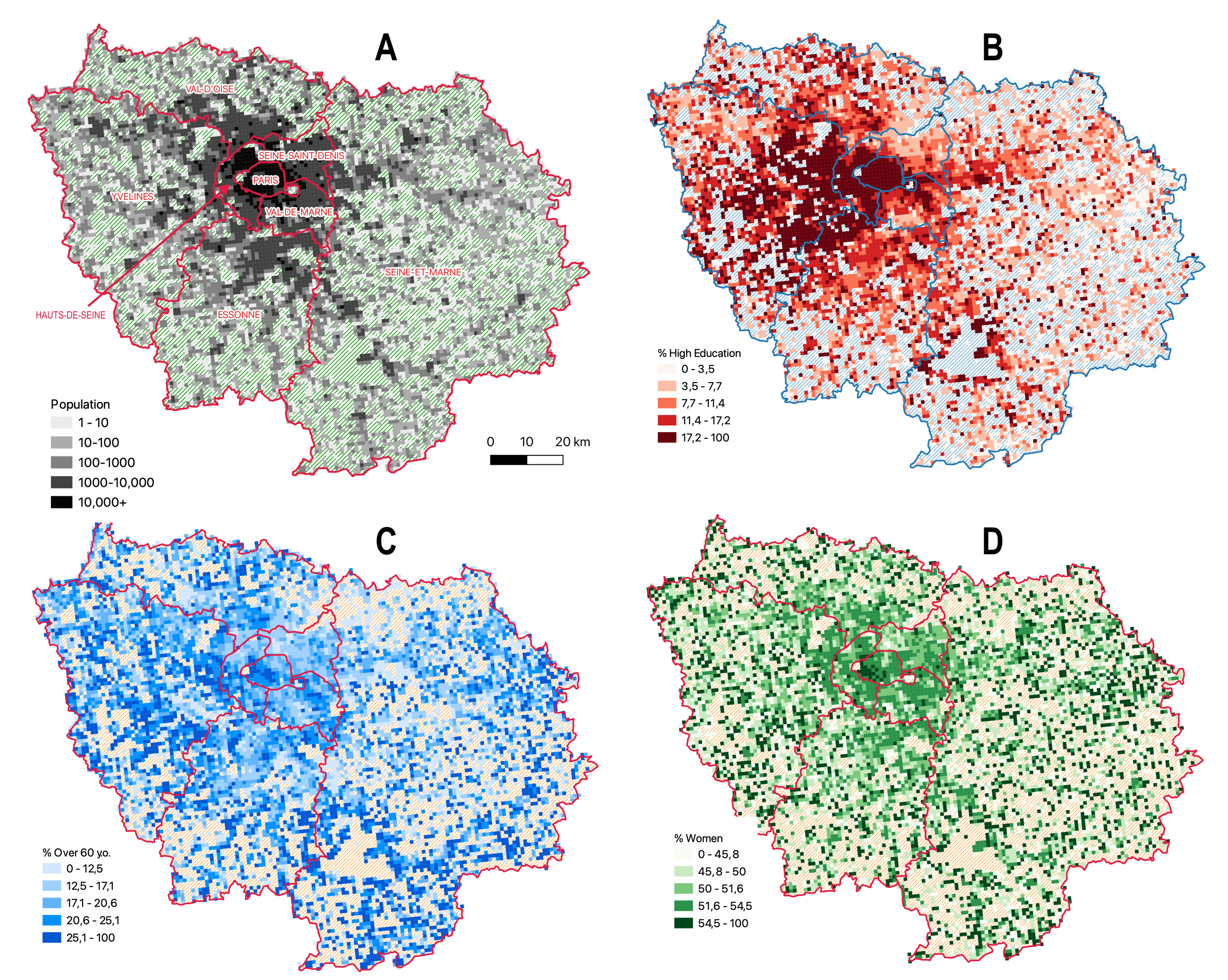
  • (Mobile) synthetic population generated from two health & nutrition surveys + French census + origin-destination survey (Vallée et al., 2024).

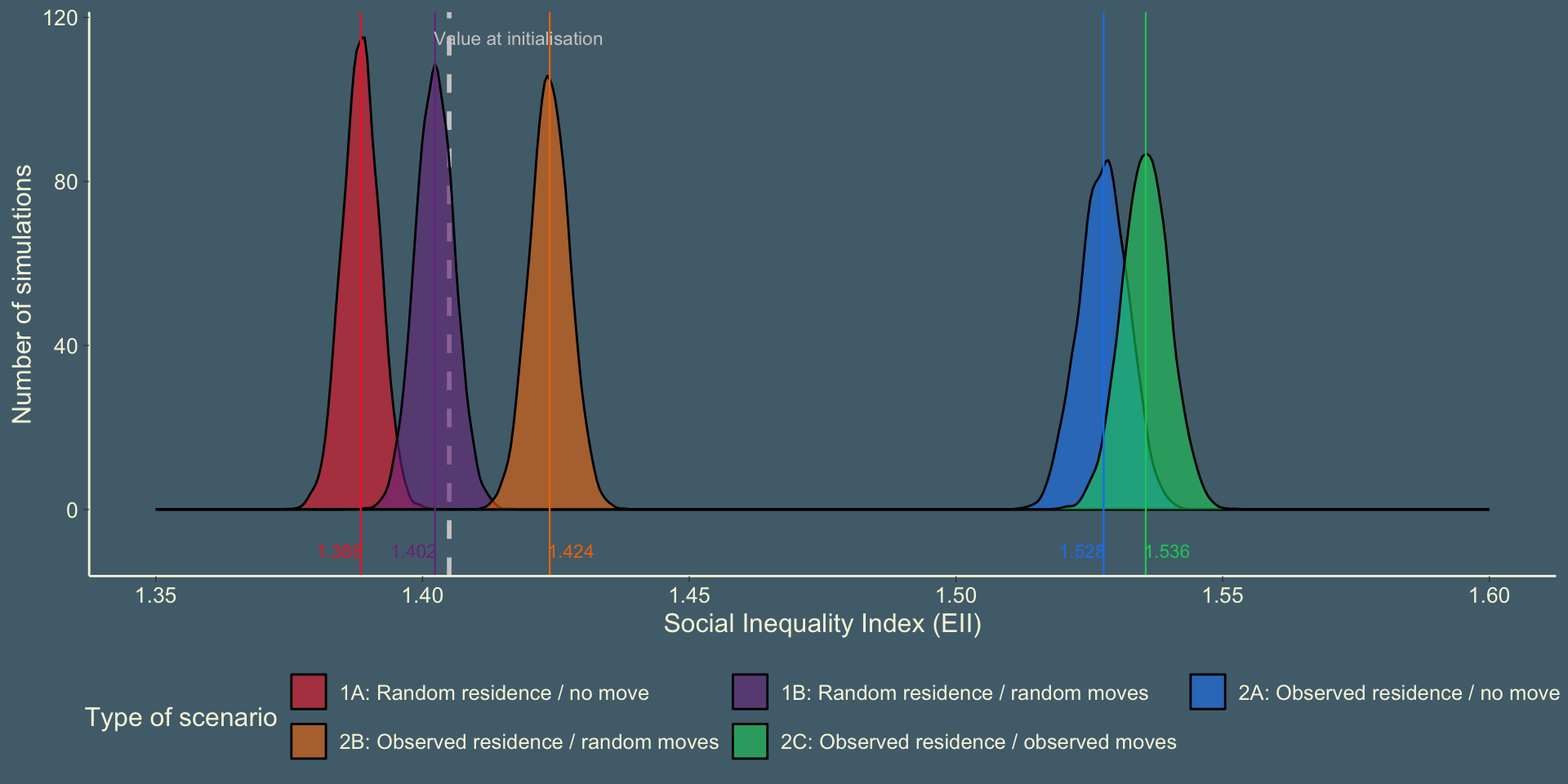
  • Counterfactual approach: combination of residential patterns and daily mobility scenarii

Location 1A 1B 2A 2B 2C
Night Random Random Observed Obs. Obs.
Day / Random / Random Obs.

Synthetic data

  • ~8.77M agents
  • 18 sociodemographic groups (3 age x 3 edu x 2 gender)
  • 8325 cells (1 km × 1 km)

Health data 🍓🥒🥑🍉🫛

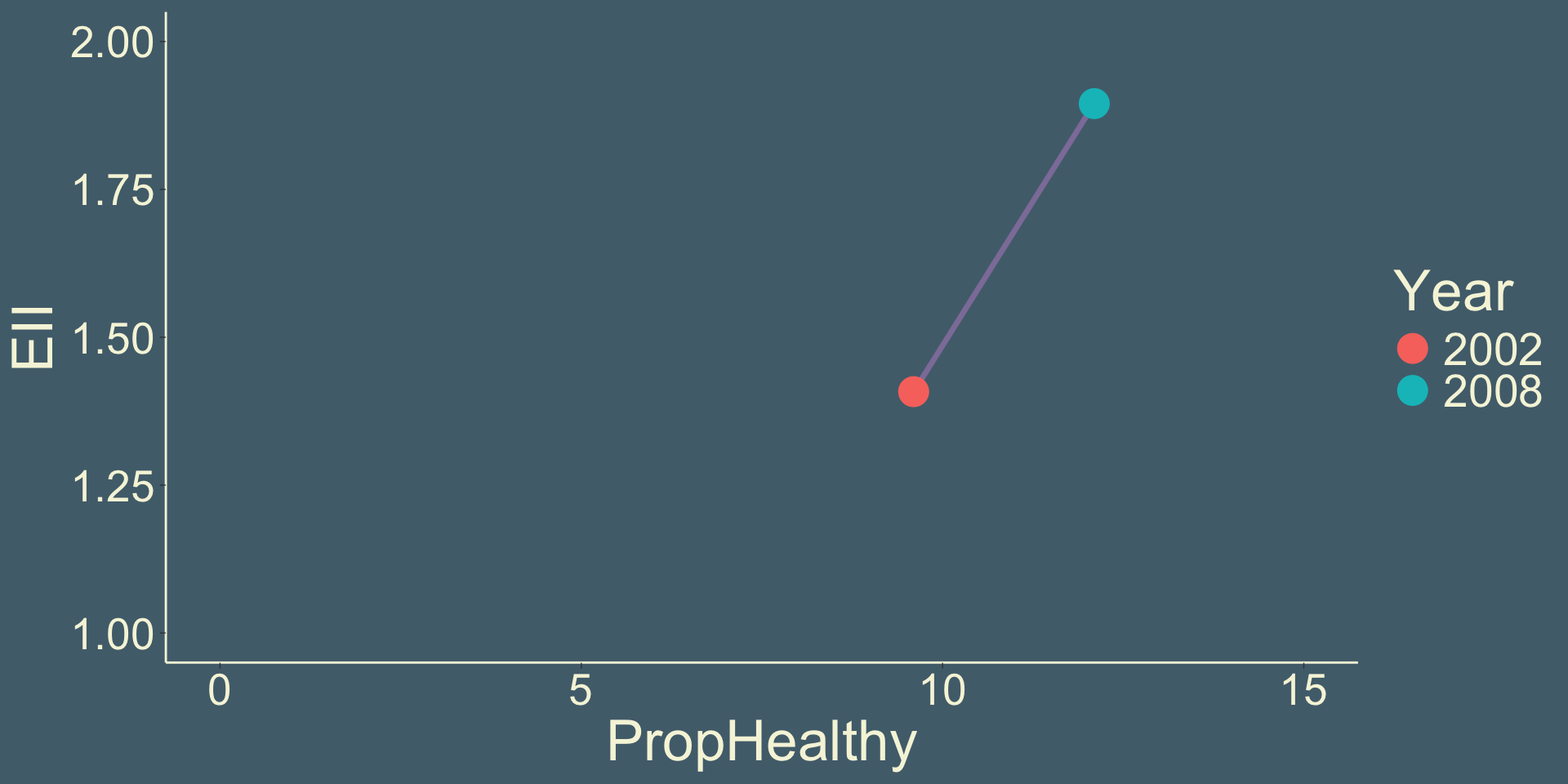
Measuring inequality

\[EII_{t} = {\sum _{sex=1}^{2}{\sum _{age=1}^{3}{ ( \frac{\%healthy_{sex,age,edu=3, t}}{\%healthy_{sex,age,edu=1, t}} \times \frac{N_{sex,age}}{N}}})}\]

Model initialisation

Agent attributes:

  • gender
  • age
  • education level
  • ‘night’ cell
  • ‘day’ cell
  • ‘evening’ cell
  • probability of eating 🍎🫐🍋🍠🥦 (according to sociodemographic group)
  • probability of opinion towards 🍐🥕🫑🥥🍅 (according to sociodemographic group)
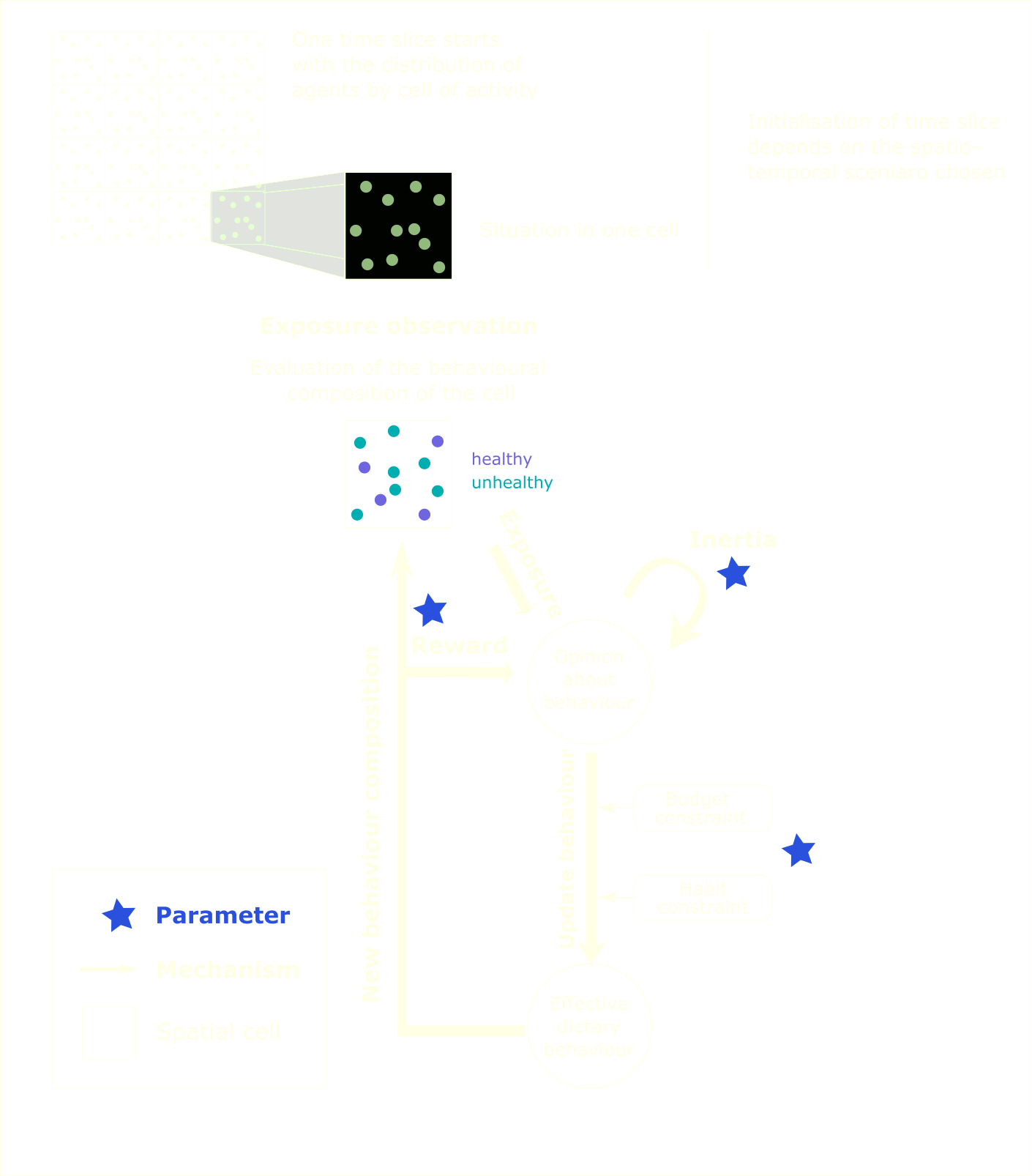
  • contraints (budget and/or habits)

Model Dynamics

3 day-parts

x 6 years

= 18 calibration steps (~20min)


  • Calibration process to minimise \(\Delta_{EII}\) and \(\Delta_{PHealthy}\)
  • Optimisation method with adaptive rejection zones to find maximally diverse “good” parameter values

= 900,000 executions OpenMole

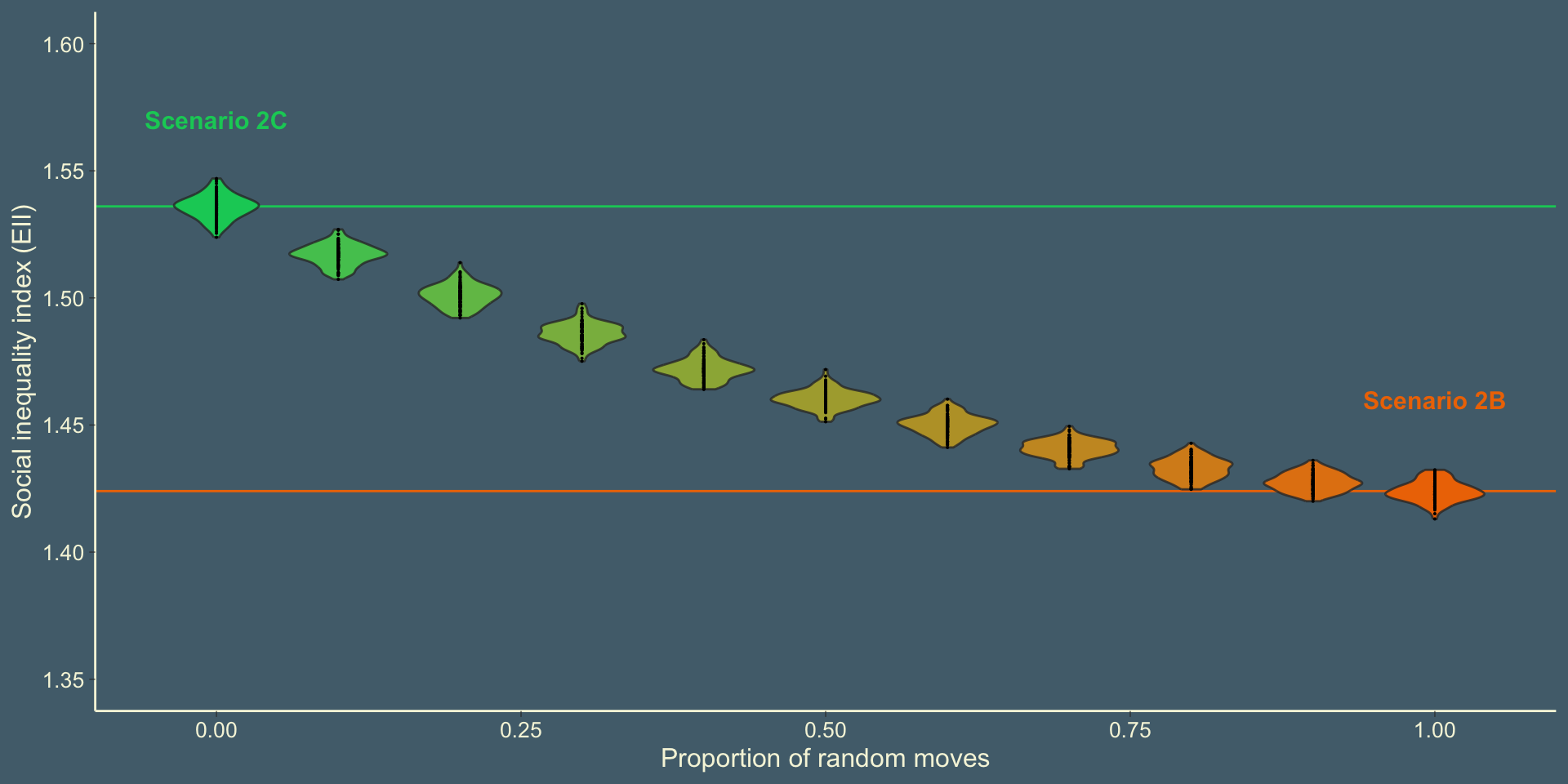
Results inequality

Results inequality

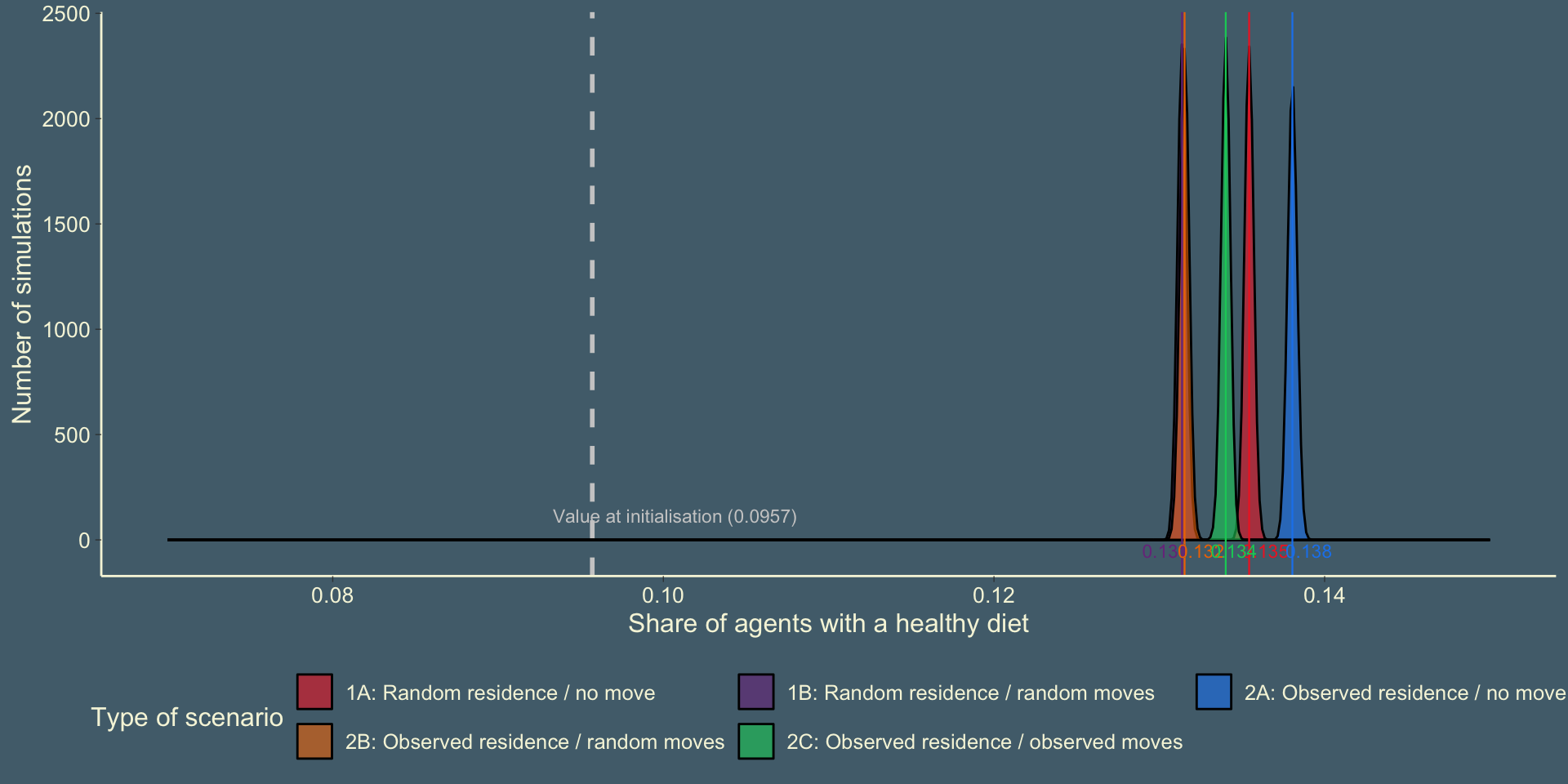
Results health behaviour

Results health behaviour

Main findings

  • Random locations (residence and/or daily moves) lead to a greater mix of people’s opinions/behaviours, and to lower social inequality over time

Mixing social groups during the day mitigates social inequalities induced by residential segregation (even small proportion of random moves)

  • Daytime mobility and segregation in Paris reinforces the unequal distribution of health behaviours between the most and least educated groups compared to scenario with residential segregation only.

Discussion

  • agents do not evolve
  • mechanisms left aside (interpersonal influence, life course tipping points, environments, perception)
  • opinion dynamic model = basic
  • hybrid temporality (3 day parts per year)
  • A reusable library for synthetic population generation

  • A new way to explore vulnerabilities combining survey-based data and agent-based modelling

  • Data-driven exploratory model

  • Neighbourhood effects around the clock

Conclusion

  1. “beyond static segregation”: daily activities at various locations affect individuals’ social exposure, interactions and behaviours, yet local policies most often consider only residential segregation

  2. national health campaigns promote healthy behaviours but pay less attention to equity concerns between social groups (concentration of benefits better-offs).

Need to retain complexity on the social, spatial and temporal dimensions, using millions of artificial agents moving and interacting in a realistically-sized artificial urban space

Our model reproduces:

  • diffusion of dietary behaviours across the entire population
  • emergence of distinct diffusion patterns within social groups

For more: (Cottineau-Mugadza et al., 2025)

Space matters!

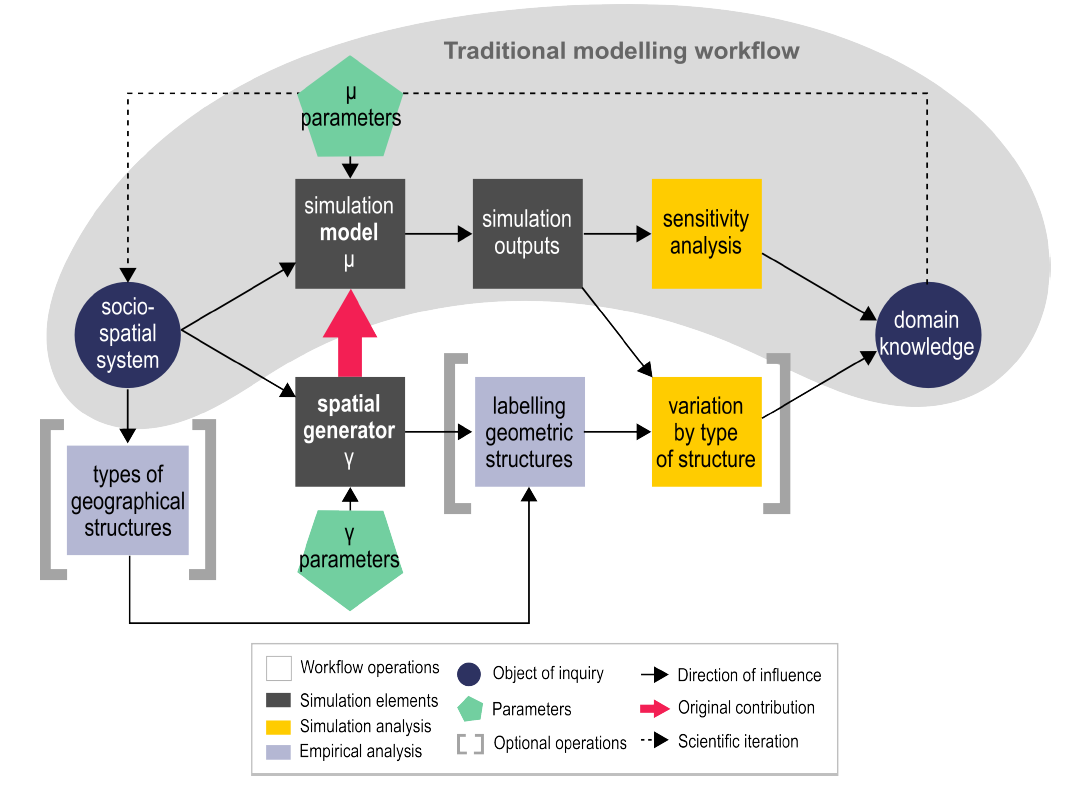
More generally, initial conditions and spatial attributes of agents matter in geosimulation.

We need:

  • (spatialized) & (intersectional) synthetic populations
  • synthetic cities
  • frameworks to assess the effect of spatial attributes on model results (spatial sensitivity)

Synthetic populations

  • Should be multidimensional
  • Should be spatial
  • Could make use of empirical microdata resources such as register data (NL, SE, DN, NO)

(Roxburgh et al., 2025)

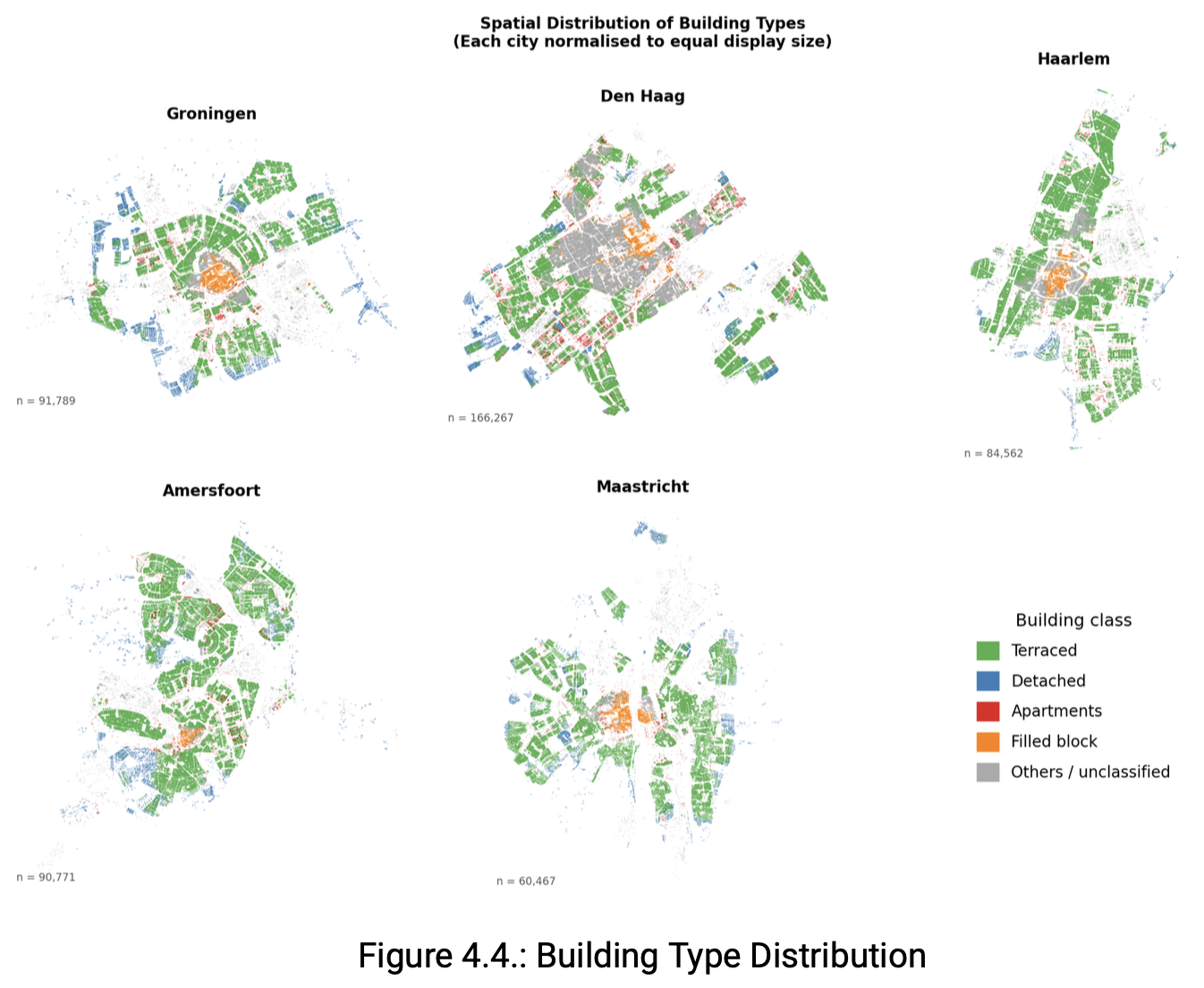
Synthetic cities

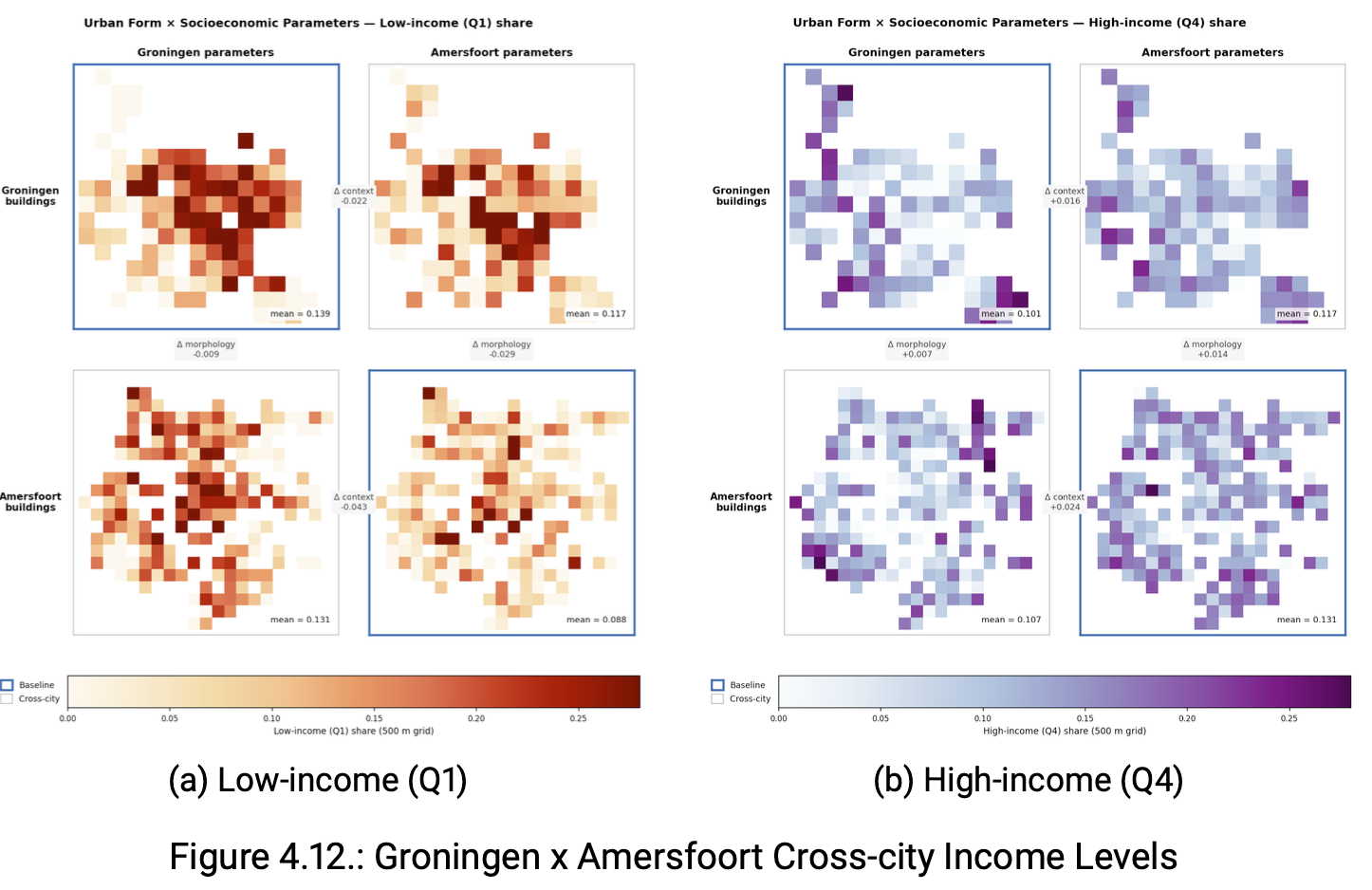
(Joh, 2026)

Synthetic cities

(Joh, 2026)

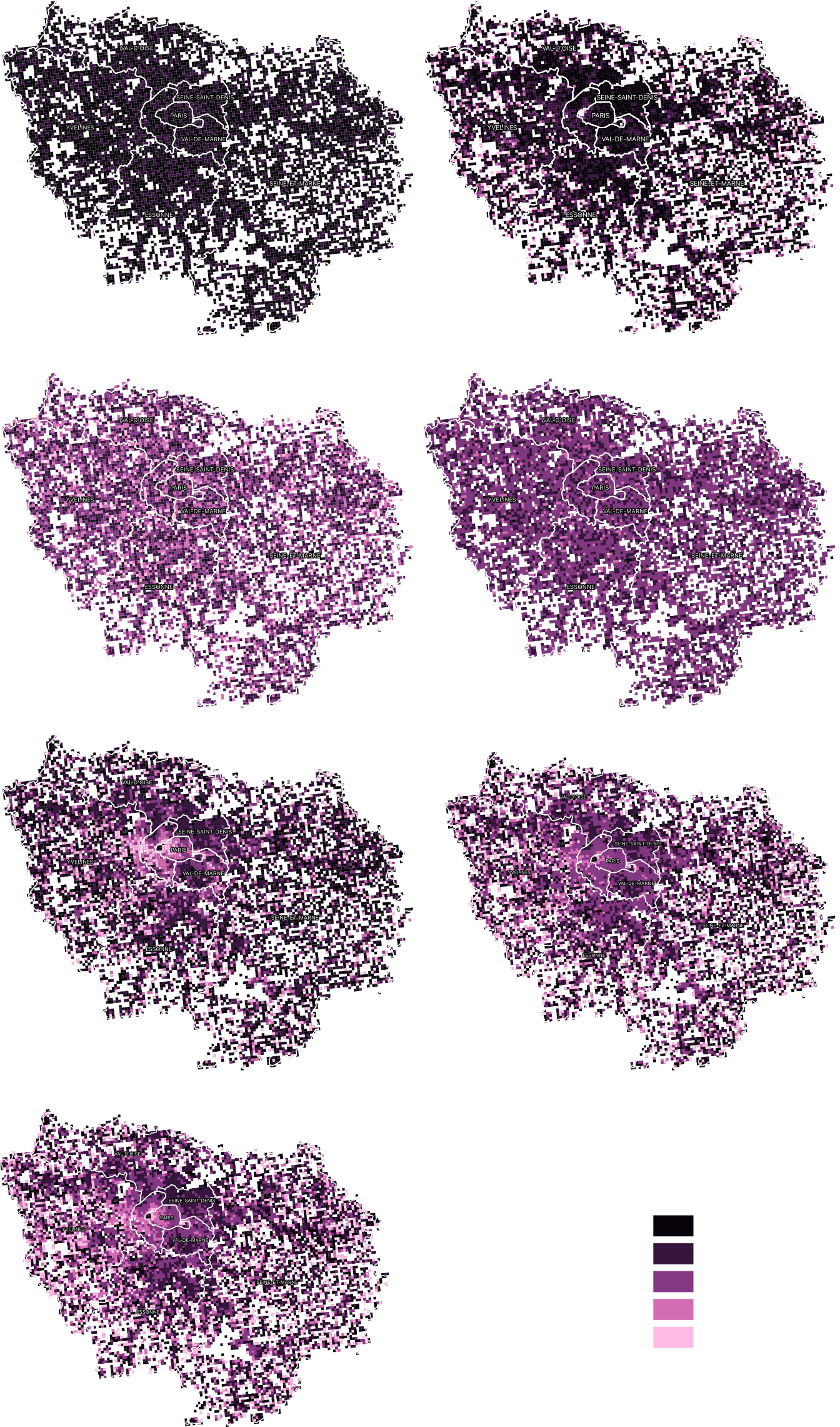
Space and sensitivity

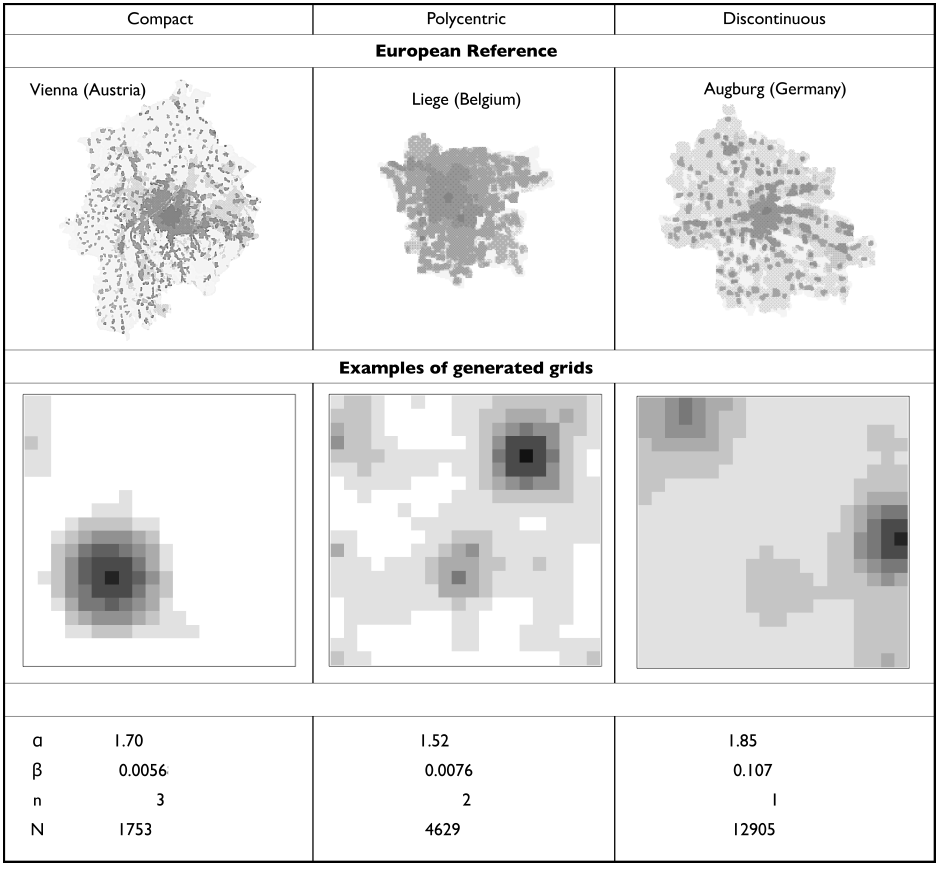
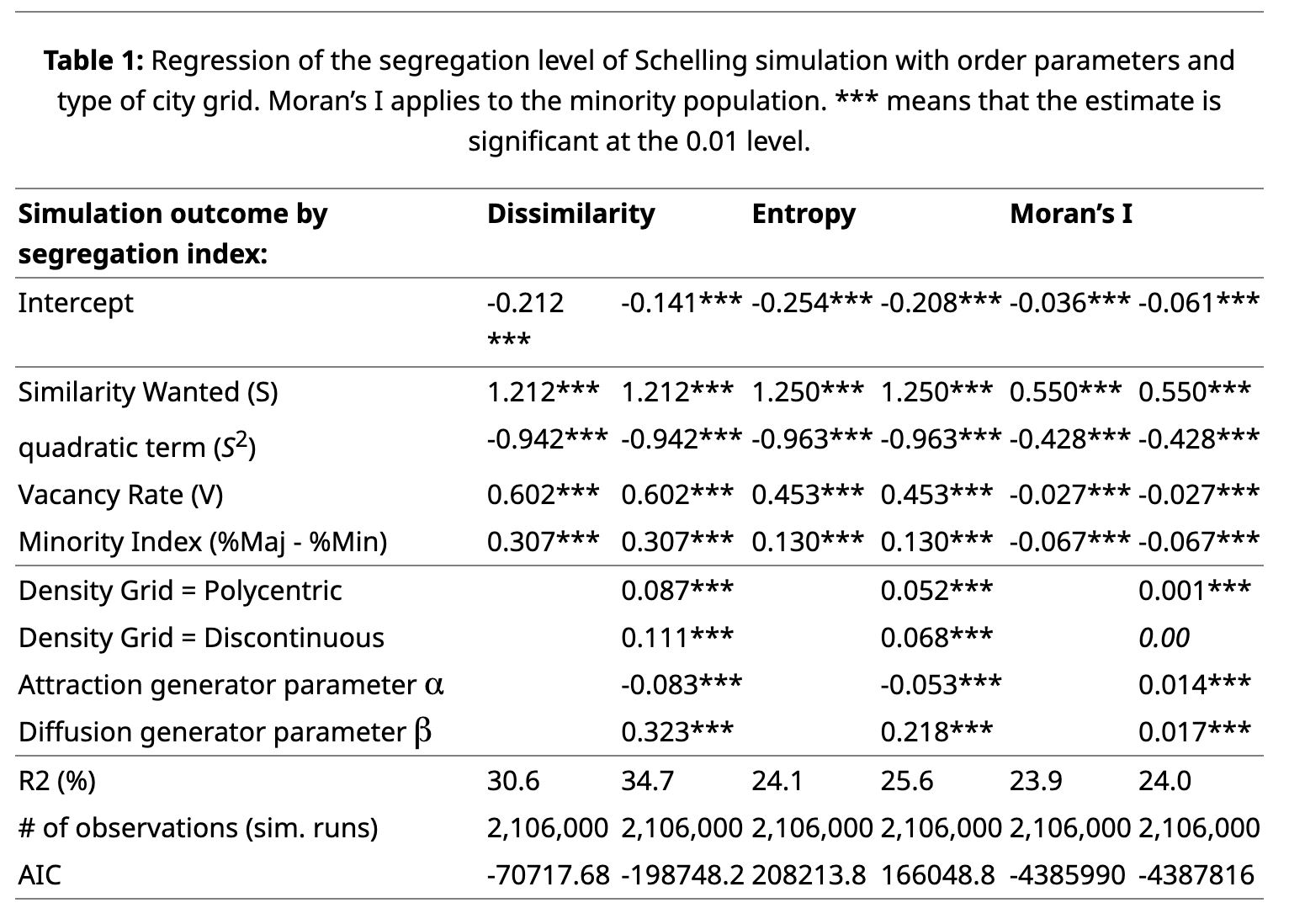
(Raimbault et al., 2019)

Space and sensitivity

(Raimbault et al., 2019)

Space and sensitivity

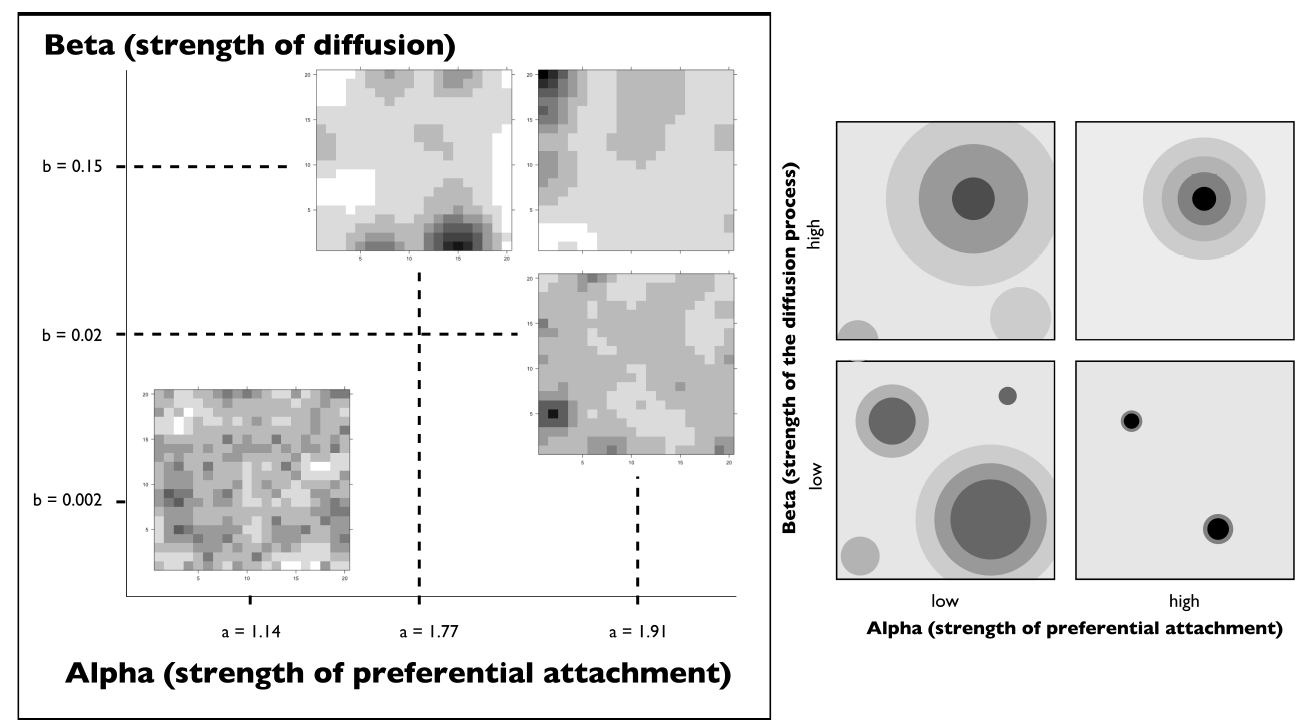
(Raimbault et al., 2019)

Space and sensitivity

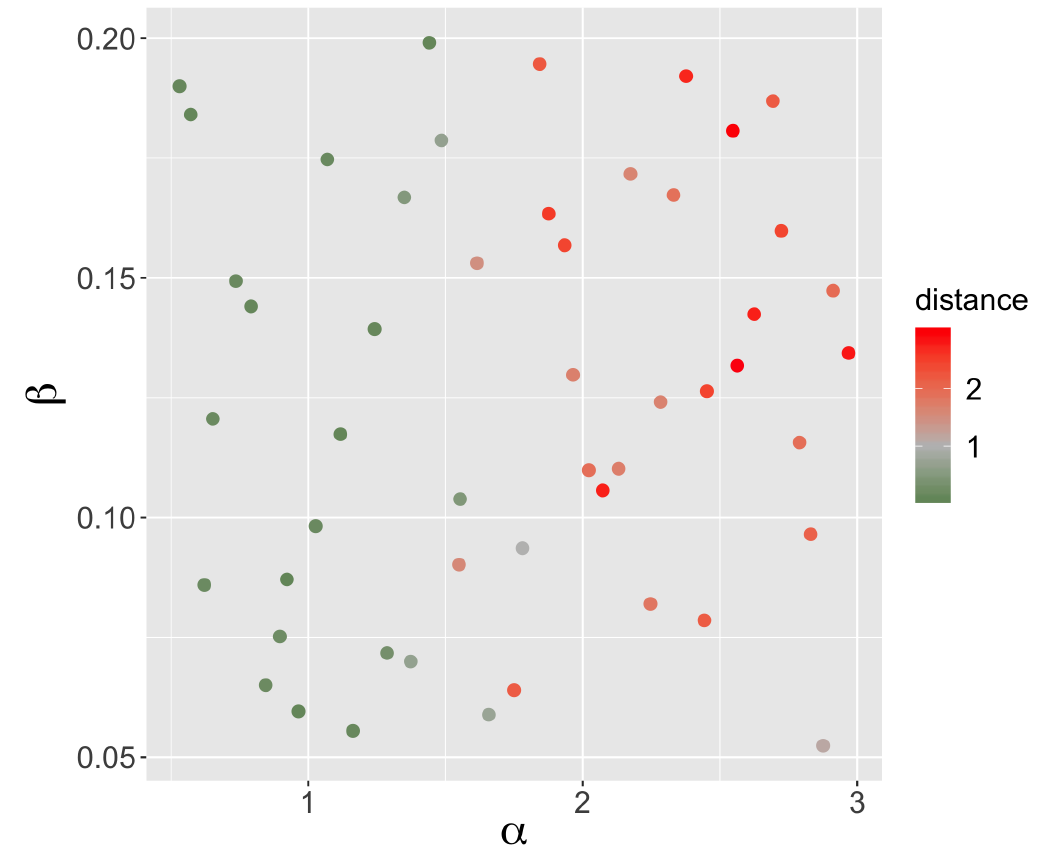
Relative distance of phase diagrams as function of generator parameters α (preferential attachment) and β (diffusion).

References

Cottineau-Mugadza, C., Perret, J., Reuillon, R., Rey-Coyrehourcq, S., & Vallée, J. (2025). An agent-based model to investigate the effects of urban segregation around the clock on inequalities in health behaviour. EPJ Data Science, 15(5). https://doi.org/10.1140/epjds/s13688-025-00603-4
Joh, H. (2026). Generating synthetic housing distributions for modelling economic segregation. Master Geomatics graduation thesis, TU Delft.
Krysan, M., & Crowder, K. (2017). Cycle of segregation: Social processes and residential stratification. Russell Sage Foundation.
Le Roux, G., Vallée, J., & Commenges, H. (2017). Social segregation around the clock in the paris region (france). Journal of Transport Geography, 59, 134–145.
Pizarro Kumpf, P., Cottineau-Mugadza, C., & Ham, M. van. (2026). Systematic review of agent-based models for economic segregation. working paper.
Raimbault, J., Cottineau, C., Texier, M. L., Néchet, F. L., & Reuillon, R. (2019). Space matters: Extending sensitivity analysis to initial spatial conditions in geosimulation models. Journal of Artificial Societies and Social Simulation, 22(4). https://doi.org/10.18564/jasss.4136
Roxburgh, N., Paolillo, R., Filatova, T., Cottineau, C., Paolucci, M., & Polhill, G. (2025). Outlining some requirements for synthetic populations to initialise agent-based models. Review of Artificial Societies and Social Simulation, 2025(1). https://rofasss.org/2025/01/29/popsynth
Tammaru, T., Knapp, D., Silm, S., Van Ham, M., & Witlox, F. (2021). Spatial underpinnings of social inequalities: A vicious circles of segregation approach. Social Inclusion, 9(2), 65–76.
Vallée, J., Douet, A., Le Roux, G., Commenges, H., Lecomte, C., & Villard, E. (2024). Mobiliscope, an open platform to explore cities and social mix around the clock (v4.3). https://doi.org/10.5281/zenodo.11111161
More about…

Find the presentation